




Technology Transfer
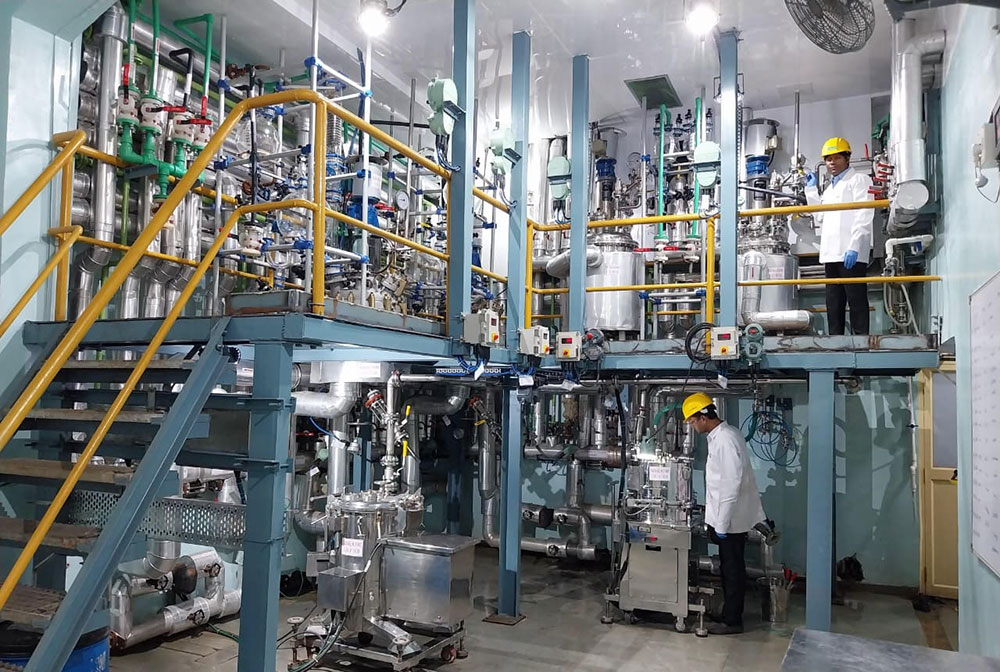
Amoli’s scientific and project management teams provide the technical expertise and forward planning needed for efficient, disruption-free technology transfers.
Our transfer methodology starts with a comprehensive evaluation of the process, equipment, analytical methods, and quality systems. We identify potential challenges early, define clear success criteria, and ensure alignment between development and manufacturing teams.
Throughout the transfer, we maintain transparent communication with clients, providing regular progress updates and collaborative decision-making opportunities to ensure project timelines and deliverables are achieved with precision.
Our Integrated Tech Transfer >>
Quality by Design (QbD) and Design of Experiments (DoE)
In our R&D laboratories, Amoli’s scientists apply Quality by Design (QbD) principles combined with Design of Experiments (DoE) tools to establish deep process understanding. These frameworks help us define and control Critical Quality Attributes (CQAs) and Critical Process Parameters (CPPs), creating a robust design space that supports consistent scale-up and manufacturing success.
Our Process Engineering Laboratory is equipped with advanced instrumentation and automation technologies, operated by trained engineers and chemists who specialize in QbD and DoE methodologies. Using platforms such as Minitab and Design Expert, we design experiments to optimize process safety, product quality, and environmental performance.
Particle Engineering and Process Control
We understand that API particle size and morphology play a critical role in product bioavailability, efficacy, and stability. Our Process Engineering and Particle Science teams utilize Process Analytical Technology (PAT) tools to develop controlled and reproducible API particle properties.
Based on customer requirements, we conduct milling and micronization studies, assess their impact on PXRD and other physical-chemical characteristics, and explore optimized drying techniques. Temperature and RPM variation studies are performed to evaluate the potential formation of polymorphs, while microscopic imaging supports real-time observation of crystal morphology during process optimization.
Our comprehensive datasets — including PSD, BD, TPD, and related analytical parameters — support pre-formulation studies and enable informed decisions during formulation development.
© 2026 Amoli Organics Pvt.Ltd. All rights reserved. Sitemap Terms & Conditions Privacy Policy Maintained by MiracleworX Web Design Company in Mumbai